

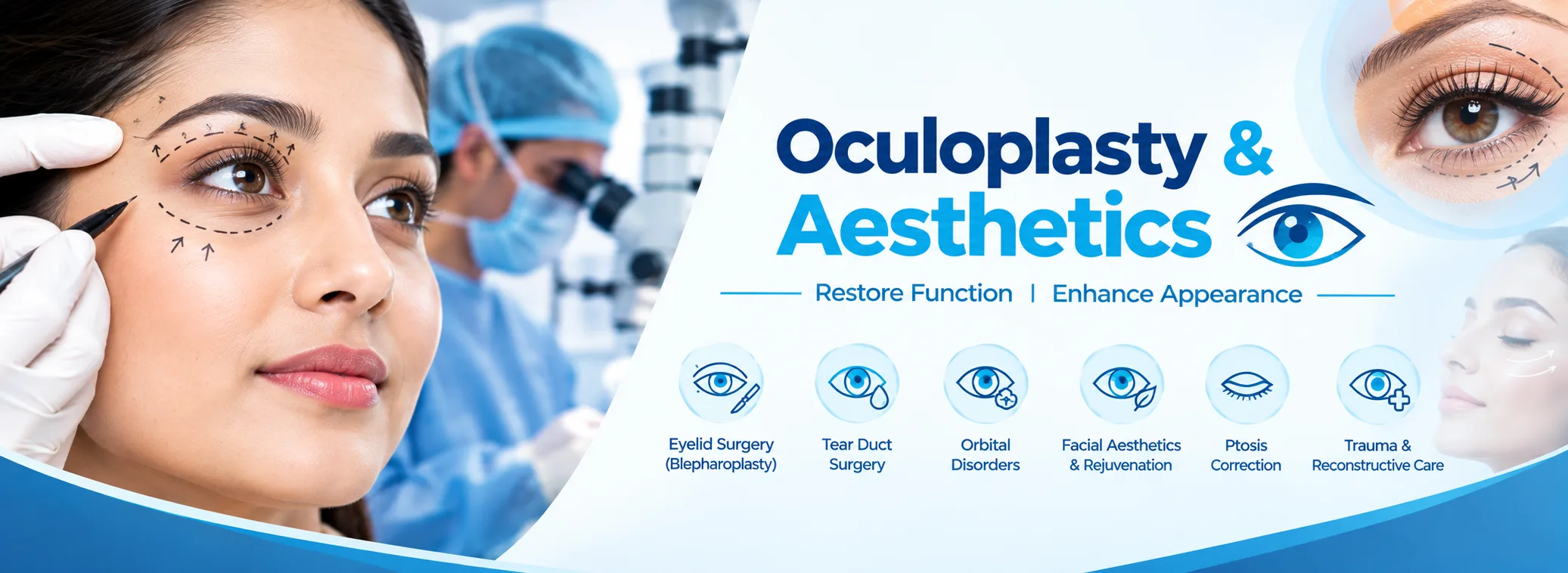
What Is Oculoplasty & Aesthetics?
Oculoplasty is a specialized area of ophthalmic care focused on the eyelids, orbit, tear drainage system and surrounding tissues. It can address functional problems that affect comfort or vision as well as selected cosmetic concerns around the eyes.

More Than Cosmetic Eye Care
Oculoplastic procedures may be recommended when eyelid position, excess eyelid skin, drooping eyelids, eyelid lesions, tear drainage problems or orbital conditions affect function. In selected cases, treatment may also improve the appearance of the area around the eyes.

A Balance of Function & Appearance
The skin and tissues around the eyes are delicate. Oculoplasty requires careful assessment of eyelid anatomy, eye surface health, facial symmetry and the reason for treatment before a procedure is planned.
Comprehensive Eyelid & Periocular Care
Treatment is selected according to the patient's anatomy, symptoms, eye health and individual goals.

Blepharoplasty
Eyelid surgery can address selected cases of excess upper or lower eyelid skin and tissue. It may be performed for functional reasons, cosmetic concerns, or a combination of both.

Ptosis Correction
Ptosis refers to a drooping upper eyelid. Depending on its cause and severity, treatment may be considered when it interferes with vision or causes significant functional concerns.

Eyelid Lesions
Lumps, cysts, growths and other eyelid lesions can be evaluated to determine whether observation, medical treatment, biopsy or removal is appropriate.

Tear Duct & Watery Eyes
Persistent watering can occur when tears are overproduced or when drainage is obstructed. Oculoplastic assessment can help identify the underlying cause.

Entropion & Ectropion
Abnormal eyelid position can cause irritation, watering and exposure of the eye surface. Treatment is planned according to the severity and underlying cause.

Orbital Conditions
The orbit is the bony space surrounding the eye. Oculoplastic specialists may evaluate swelling, masses, trauma-related problems and other conditions affecting the orbital region.

Blepharoplasty: Functional & Aesthetic Eyelid Care
Blepharoplasty is a surgical procedure involving the eyelids. Depending on the patient's anatomy and reason for treatment, it may involve carefully removing or repositioning selected skin, muscle or fat around the eyelids.
Upper eyelid surgery may sometimes be considered when excess skin contributes to a restricted field of vision. Lower eyelid procedures may address selected concerns involving lower eyelid skin, muscle or fat.
Common Oculoplastic Concerns
Not every eyelid or periocular problem requires surgery. A detailed examination helps determine whether monitoring, medical treatment or a procedure is appropriate.

Droopy Eyelids — Ptosis
Ptosis can make one or both upper eyelids appear lower than usual. Depending on severity, it may affect appearance or the upper field of vision.

Excess Eyelid Skin
Changes in eyelid skin can become more noticeable with age. In selected patients, excess upper eyelid skin may also contribute to functional visual-field concerns.

Entropion & Ectropion
Entropion causes the eyelid to turn inward, while ectropion causes it to turn outward. Both can affect comfort and the eye surface.

Watery Eyes
Excessive watering may be related to irritation, eyelid position, tear overproduction or blockage of the tear drainage pathway.

Orbital Problems
Swelling, masses, trauma and other conditions involving the tissues around the eye may require specialized orbital assessment.

Periocular Aesthetic Concerns
Selected cosmetic concerns around the eyes can be assessed with attention to facial proportions, eyelid anatomy and preservation of natural eyelid function.
Functional & Aesthetic Oculoplasty
Oculoplasty can have a functional purpose, an aesthetic purpose, or both. The treatment plan depends on the patient's individual anatomy and clinical needs.
Functional Oculoplasty
Functional procedures are intended to address problems that affect eyelid function, the eye surface, tear drainage or vision.
- Droopy eyelids affecting the visual field
- Eyelids turning inward or outward
- Tear drainage obstruction
- Eyelid lesions requiring removal or assessment
- Selected orbital conditions
Aesthetic Oculoplasty
Aesthetic treatment focuses on selected appearance concerns around the eyes while taking eyelid anatomy and function into consideration.
- Upper eyelid appearance
- Selected lower eyelid concerns
- Appearance of under-eye fullness
- Age-related periocular changes
- Facial and eyelid symmetry considerations
What Happens During an Oculoplasty Consultation?
A careful assessment helps determine the cause of the concern and whether a procedure is appropriate.
Detailed History
Your symptoms, previous treatments, medical history and treatment goals are discussed.
Eye & Eyelid Examination
Eyelid position, eye surface, tear drainage and surrounding tissues are assessed as appropriate.
Treatment Planning
Suitable options, expected benefits, limitations and alternatives are explained.
Follow-Up
If treatment is performed, follow-up is arranged to monitor healing and eyelid function.

What to Expect After Oculoplasty
Recovery varies according to the procedure, the patient's health and the extent of treatment. The doctor will provide specific instructions before and after the procedure.
Swelling & Bruising
Temporary swelling or bruising can occur after eyelid procedures and generally improves during the healing period.
Medication & Eye Care
Prescribed medicines, ointments or eye drops should be used exactly as instructed.
Activity Restrictions
Certain activities may need to be limited temporarily depending on the procedure.
Follow-Up Visits
Follow-up appointments allow the doctor to assess healing, eyelid position and overall eye health.
Our Approach to Oculoplasty
Every eyelid and facial structure is different. Treatment should therefore be planned around the individual rather than using a one-size-fits-all approach.

Detailed Assessment
The eyes, eyelids and surrounding structures are assessed before treatment is planned.

Natural-Looking Goals
Where aesthetic treatment is appropriate, planning considers facial balance and preservation of eyelid function.

Individualized Care
Treatment recommendations are based on the patient's specific condition, anatomy and goals.
Understanding Possible Risks
Every procedure has potential risks
Oculoplastic procedures are planned carefully, but no surgery is completely risk-free. The specific risks depend on the procedure and the patient's individual health. These should be discussed with the treating specialist before making a decision.
Oculoplasty & Aesthetics FAQs
Take the Next Step Towards Healthier, Balanced Eyes
Whether you are concerned about droopy eyelids, eyelid swelling, watery eyes, eyelid lesions or an aesthetic concern around the eyes, a specialist assessment can help identify the right approach.