

What Is Premium Cataract Surgery?
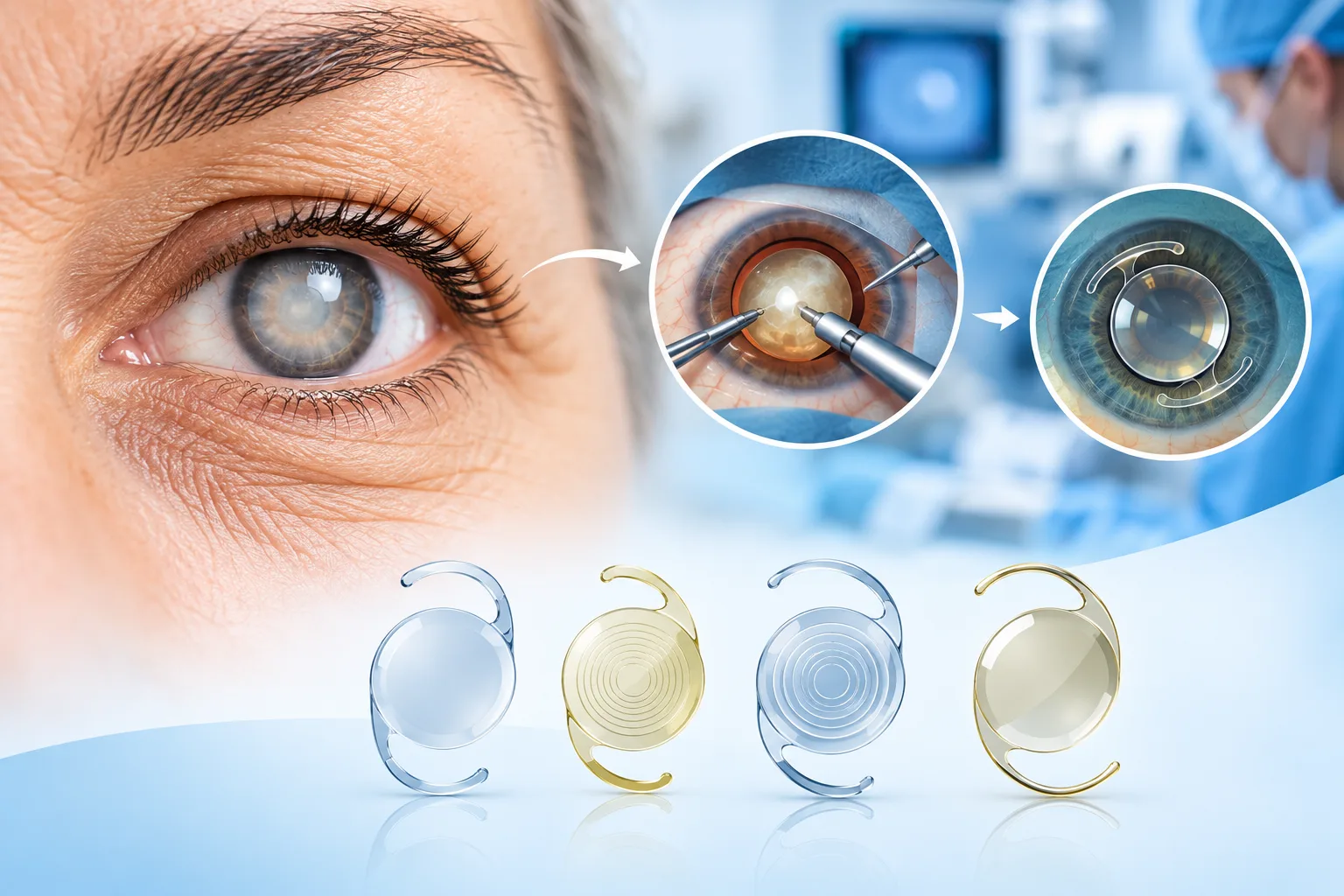
Premium cataract surgery involves removing the cloudy natural lens from the eye and replacing it with an artificial intraocular lens. What makes the procedure “premium” is generally the use of advanced IOL technology and personalised lens selection based on the patient’s lifestyle, eye measurements, and vision goals.
Unlike a standard monofocal lens, which is generally designed to provide clear vision at one main distance, premium IOL options can include toric, multifocal, trifocal, and extended-depth-of-focus (EDOF) lenses. Each type is designed for different visual needs.
The aim is not simply to remove the cataract but to choose a lens that suits the patient’s individual requirements.

How Does Cataract Affect Your Vision?
A cataract develops when the normally clear natural lens of the eye becomes cloudy. This can happen gradually, so some people may not notice the changes in their vision initially.
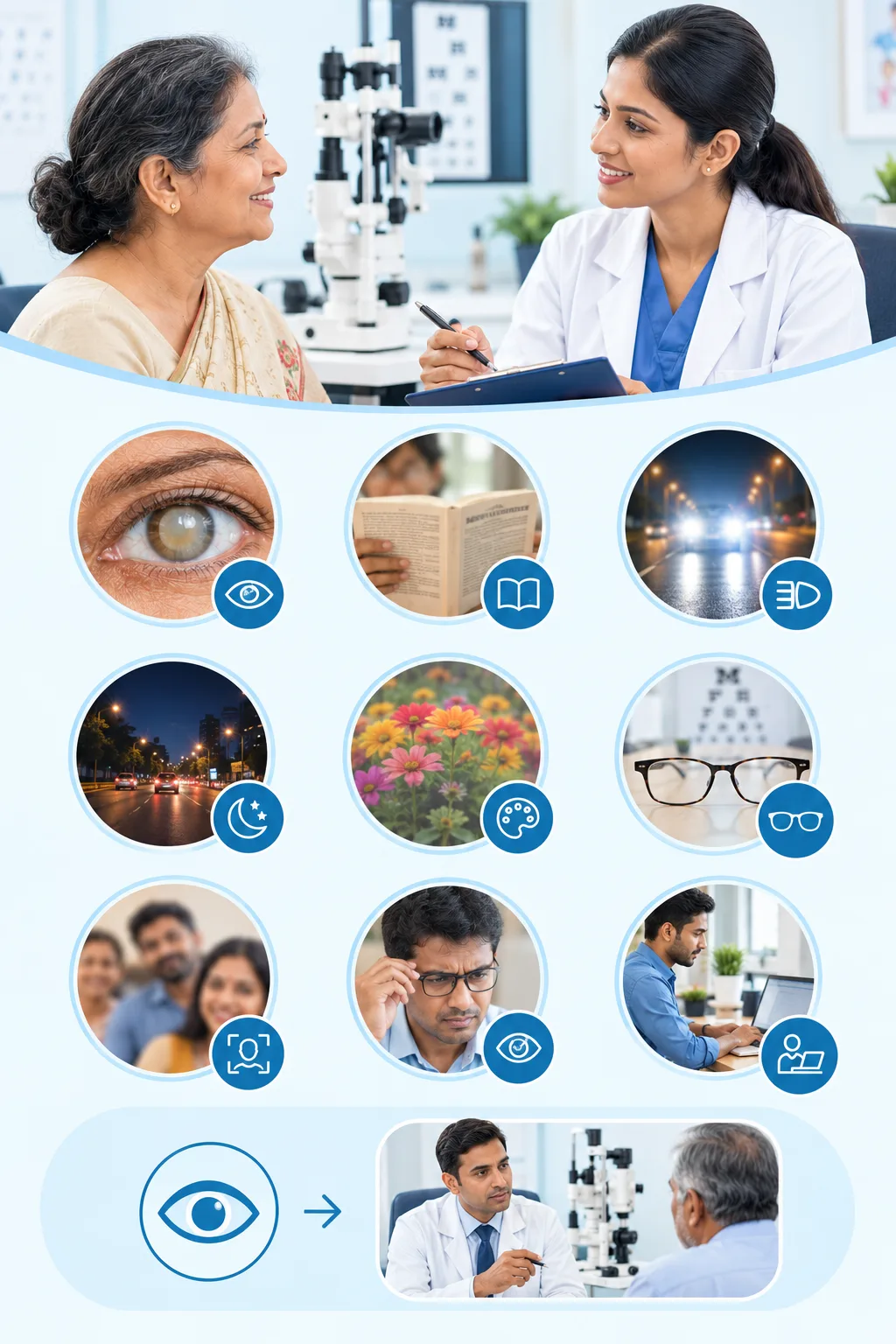
Common symptoms include:
- Blurred or hazy vision
- Difficulty reading small print
- Glare from headlights and bright lights
- Difficulty seeing clearly at night
- Faded or less vibrant colours
- Frequent changes in spectacle prescription
- Difficulty recognising faces
- Reduced vision even with glasses
When these symptoms begin interfering with daily activities, an ophthalmologist can evaluate whether cataract surgery is appropriate.
Unlike a standard monofocal lens, which is generally designed to provide clear vision at one main distance, premium IOL options can include toric, multifocal, trifocal, and extended-depth-of-focus (EDOF) lenses. Each type is designed for different visual needs.
The aim is not simply to remove the cataract but to choose a lens that suits the patient’s individual requirements.
Types of Premium Intraocular Lenses
One of the most important parts of premium cataract surgery is choosing the appropriate IOL. There is no single premium lens that is suitable for every patient. Your surgeon will consider your eye health, lifestyle, existing prescription, corneal measurements, retinal health, and expectations.
1. Multifocal and Trifocal IOLs
Multifocal and trifocal lenses are designed to provide vision at different distances. Depending on the lens design, they may help with distance, intermediate, and near vision.
This can be particularly useful for people who want to reduce their dependence on glasses for activities such as reading, computer work, and seeing objects in the distance.
However, some patients may experience visual effects such as glare or halos, particularly in certain lighting conditions. Your surgeon should discuss the potential benefits and limitations before surgery.
EDOF Lenses
Extended Depth of Focus (EDOF) lenses are designed to provide a broader range of vision rather than focusing on only one distance.
They may be considered for patients who want good distance and intermediate vision while reducing their dependence on glasses for everyday activities. The exact range of vision varies according to the lens and the individual patient.
Toric IOLs
Toric lenses are designed to correct astigmatism during cataract surgery.
Astigmatism can cause blurred or distorted vision because the cornea or lens has an irregular curvature. A toric IOL can be considered when the patient’s eye measurements show that this type of correction is appropriate.
Benefits of Premium Cataract Surgery
- Reduced dependence on glasses: Advanced IOLs can potentially reduce the need for spectacles for certain distances and activities.
- Vision at multiple distances: Depending on the IOL selected, patients may achieve useful vision for distance, intermediate, and near tasks.
Astigmatism correction: Toric IOLs can be used for suitable patients with corneal astigmatism.
- Personalised treatment: IOL selection can be based on lifestyle, eye measurements, visual requirements, and expectations.
- Modern surgical techniques: Small-incision cataract surgery and advanced diagnostic technology can support precise surgical planning.
Who Is a Good Candidate for Premium Cataract Surgery?
Premium cataract surgery may be considered for adults whose cataracts are affecting their quality of vision and who are interested in reducing their dependence on spectacles.
A detailed examination is essential before choosing a premium IOL. Patients with certain corneal, retinal, optic nerve, or other eye conditions may not be suitable for every type of premium lens.
Your ophthalmologist may evaluate:
- Overall eye health
- Corneal measurements
- Retinal condition
- Existing refractive error
- Astigmatism
- Lifestyle and occupation
- Reading and computer requirements
- Night-driving needs
- Expectations regarding glasses
The decision should be based on a personalised assessment rather than simply choosing the most advanced or expensive lens.
Premium Cataract Surgery vs. Standard Cataract Surgery
Premium cataract surgery
Premium cataract surgery uses advanced IOLs such as multifocal, trifocal, EDOF, or toric lenses. Depending on the patient’s eye condition and the lens selected, these IOLs may provide a wider range of vision and can reduce dependence on glasses. Toric IOLs can also help correct astigmatism.
- Uses advanced IOL options.
- May provide vision at multiple distances.
- May reduce dependence on glasses.
- Requires careful patient and eye evaluation.
- More personalised IOL selection.
Standard cataract surgery
Standard cataract surgery usually uses a monofocal IOL, which is designed to provide clear vision at one primary distance, most commonly distance vision. Patients may still need glasses for reading, computer work, or other close-up activities. Standard IOLs are a suitable option for many people and can provide good visual outcomes.
- Usually uses a monofocal IOL.
- Primarily focuses on one distance.
- Glasses may be needed for near tasks.
- Suitable for many patients.
- Generally simpler lens selection.
Frequently Asked Questions
Find answers to common questions about premium cataract surgery.
Cataract surgery is a commonly performed eye procedure, but like any surgery, it has potential risks and complications. A complete examination and discussion with a qualified ophthalmologist are important before treatment.
Not necessarily. Premium IOLs can reduce dependence on glasses, but some patients may still need spectacles for particular activities. Results vary between individuals.
Your ophthalmologist will consider your eye measurements, eye health, lifestyle, visual requirements, and expectations before recommending suitable IOL options.
No. Different premium IOLs have different requirements. A detailed eye examination is necessary to determine whether a particular lens is appropriate.
Both options can provide good visual outcomes. Premium cataract surgery offers advanced IOL choices that may reduce dependence on glasses, while standard surgery generally uses a monofocal lens. The right option depends on your individual eye health and visual needs.
Premium IOLs may reduce the need for glasses for certain activities, but complete freedom from glasses cannot be guaranteed. Your results depend on the lens selected and your individual eye condition.
Your ophthalmologist will evaluate your eye health, corneal measurements, prescription, lifestyle, and visual expectations. Based on these factors, they can recommend the most appropriate IOL and cataract surgery option for you.